
Soft washing is a gentle way to clean roofs, siding, and outdoor surfaces without high-pressure water. It uses special chemicals to kill mold, algae, and stains safely.
Common solutions include bleach (sodium hypochlorite), surfactants (soaps), and water. These chemicals break down grime without damaging surfaces.
Homeowners should know what’s used and how it works. Proper mixing and safety steps ensure effective cleaning while protecting your home. Let’s explore the key chemicals in soft washing.
What is Soft Washing?
Soft washing is a low-pressure cleaning method designed to remove dirt, algae, mold, and stains from exterior surfaces without causing damage. Instead of relying on high water pressure, it uses special cleaning solutions that chemically break down grime and organic growth.
This process is ideal for surfaces like roofs, weatherboards, painted exteriors, and composite cladding—materials that could be damaged by power washing.
Sun SoftWash, serving Tauranga, Hamilton, Auckland, and nearby areas, uses calibrated soft-wash systems and eco-friendly solutions to clean thoroughly while protecting both surfaces and landscaping.
Main Chemicals Used in Soft Washing
Professional soft washing relies on a combination of three core ingredients: a cleaning agent, a surfactant, and water. Optional additives may be used depending on surface type or contamination level.
1. Sodium Hypochlorite (Bleach)
Sodium hypochlorite (NaOCl) is the primary active ingredient in most soft-wash mixes. It’s a disinfectant that kills algae, mold, mildew, moss, and bacteria on contact by oxidizing their cell structure.
Professionals dilute it to safe concentrations—typically between 0.5% and 3% available chlorine—depending on the material being cleaned. At these levels, it sanitizes without degrading paint, shingles, or sealants.
It’s the same active compound used in household bleach but applied under controlled ratios and neutralized after rinsing.
2. Surfactants (Cleaning Agents)
Surfactants are specialized soaps that help cleaning solutions spread evenly and cling to vertical surfaces. They reduce water’s surface tension, allowing the sodium hypochlorite to penetrate biofilms and loosen dirt.
Quality surfactants are biodegradable and designed to rinse clean without residue. They also prevent streaking and help lift oily contaminants from painted or coated surfaces.
3. Water
Water is the foundation of every soft-wash solution. It dilutes chemicals to safe working strength and rinses away loosened dirt and dead organic material.
Soft washing uses low-pressure pumps and large-volume water flow, which ensures that contaminants are gently flushed off without damaging paint or siding.
4. Additives and Enhancers (Optional)
Professionals sometimes add supplementary ingredients to improve performance or protect certain materials:
- Algaecides: Prevent algae from regrowing on roofs or shaded walls.
- Rust inhibitors: Protect metal fixtures and gutters from corrosion.
- Fragrance agents: Mask the smell of chlorine during cleaning.
- pH neutralizers: Balance the solution for sensitive surfaces.
These optional additives help tailor each job to the property’s condition and climate.
Safety Tips When Handling Soft Wash Chemicals
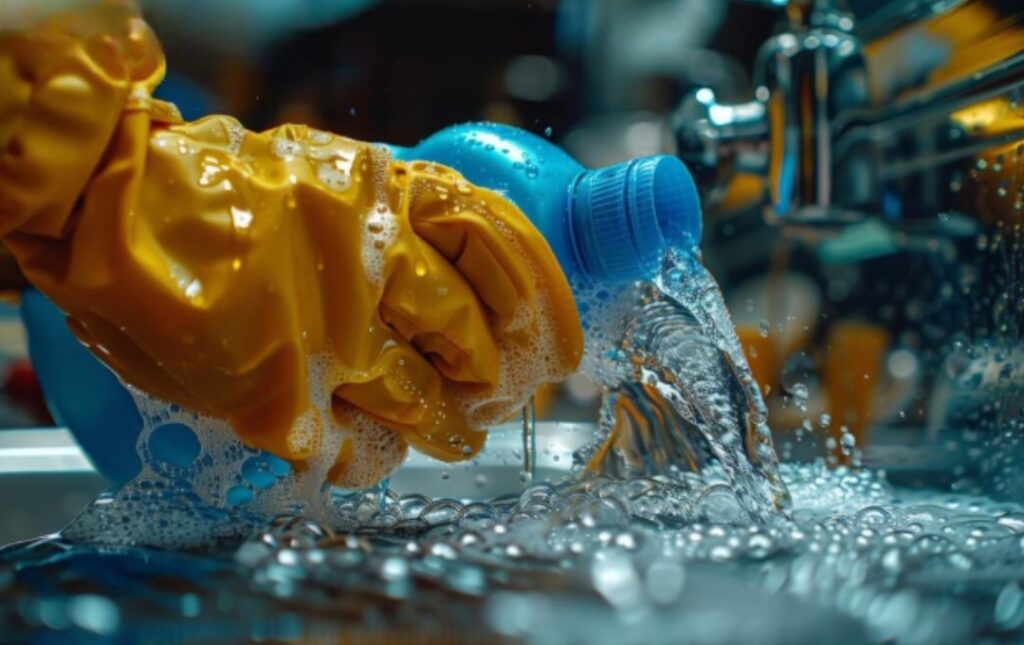
While soft washing chemicals are effective, they must be handled carefully. Here’s what professional crews—and informed homeowners—should know.
1. Personal Protective Equipment (PPE)
Use gloves, goggles, long sleeves, and a respirator when handling concentrated solutions. Skin and eye contact can cause irritation, and inhaling fumes should always be avoided.
2. Proper Mixing
Always add chemicals to water, never the reverse, to prevent heat buildup and splashing. Mixing bleach with acids or ammonia releases toxic chlorine gas. Work in ventilated areas or outdoors.
3. Protecting Plants and Property
Pre-wet nearby plants, lawns, and decorative surfaces before cleaning. After rinsing, soak these areas again with clean water to neutralize any residue. Cover delicate vegetation with plastic sheeting if necessary.
4. Correct Dilution Ratios
Using a mix that’s too strong can fade paint or damage coatings; too weak, and it won’t remove stains effectively. Professionals like Sun SoftWash use calibrated systems to maintain the correct chemical ratios for each surface type.
5. Storage and Disposal
Keep chemicals in original, labeled containers and store them in cool, shaded areas. Dispose of unused solutions according to local environmental regulations—never down household drains.
Why Soft Washing Outperforms High-Pressure Cleaning
Soft washing doesn’t just clean the surface; it removes biological growth at the root. By eliminating mold spores and algae colonies, it prevents regrowth for months or even years.
In contrast, pressure washing may blast away surface grime but can drive water into cracks, damage paint, or leave spores intact—leading to faster regrowth.
That’s why homeowners across Tauranga, Hamilton, and Auckland rely on Sun SoftWash. Our system combines biodegradable cleaning chemistry, precision equipment, and eco-safe techniques to restore exteriors without damage.
Conclusion
Soft washing uses a smart mix of sodium hypochlorite, surfactants, and water to safely clean your home’s exterior. These chemicals work together to kill mold, algae, and stains without harsh scrubbing or damaging pressure. While effective, proper handling and dilution are crucial for safety and best results. For tough jobs, consider hiring professionals who understand the differences in Soft Washing vs Pressure Washing and apply the right methods for your home.
With the right approach, soft washing keeps your home looking fresh while protecting surfaces. Always test solutions first and follow safety guidelines for worry-free cleaning.
